
Red Dog Poker Rules Explained: The Spread, Payouts, Consecutive Cards, the Raise Decision and the House Edge
Red Dog, also sold as Acey Deucey in some rooms, is a simple card game where you bet on whether a third card will land between two others. There are no hand rankings and no dealer decisions, so it is easy to learn in a minute. It is also rare on casino floors today, which is one reason many players have never seen it. This guide explains the spread, the payouts, the raise option, where the house edge comes from and why no pattern of play turns it into a winner.

What Red Dog Is
Red Dog is a banking game played against the house with several standard decks shuffled together, commonly six or eight. Players do not compete with one another, and the cards have no suits that matter. Only rank counts, with the ace high and the two low. The game has been dealt in a few American card rooms and cruise ships over the years, but it is far less common than blackjack or three card poker. If you want to try it, check with the venue first, because many casinos do not offer it at all.
How a Round Works
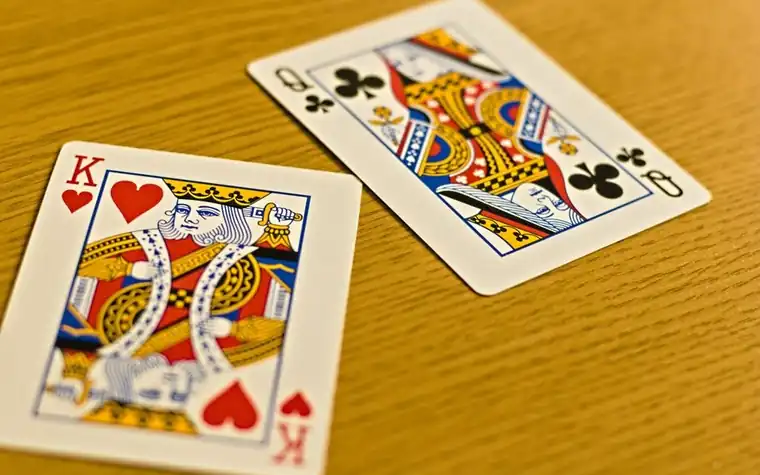
You place an ante, and the dealer turns up two cards. The number of ranks sitting between those two cards is called the spread. A seven and a ten, for example, have two ranks between them, the eight and the nine, so the spread is two. Once you can see the spread, you decide whether to add a raise of up to the size of your ante. The dealer then turns up a third card. If its rank falls strictly between the first two, you win. If it falls outside them, you lose both the ante and any raise.
Pairs and Consecutive Cards
Two special cases are decided before any betting. If the first two cards are consecutive, such as a six and a seven, there is no rank between them and the hand is a push, so your ante is returned. If the first two cards are a pair, you cannot raise. The dealer simply turns a third card. If it matches the pair, you are paid a large bonus on the ante, often listed as 11 to 1. If it does not match, the hand is a push. Exact rules differ, so read the sign at the table before you play.
The Payout Table
The payout rises as the spread narrows, because a narrow spread is harder to hit. A common table pays 5 to 1 on a spread of one, 4 to 1 on a spread of two, 2 to 1 on a spread of three, and 1 to 1 on a spread of four or more. These payouts apply to the ante and to any raise. A spread of one means only a single rank wins, so the odds of landing on it are a little over one in thirteen, and the payout is set accordingly. Casinos can change the table, so compare the posted version with the one above.
The Raise Decision and the House Edge
The only real choice is whether to raise. The odds of a winning third card grow as the spread widens, so a raise is worth more when the spread is large. Commonly published strategy for six or eight decks is to raise on a spread of seven or more and otherwise leave your bet where it is. Following that rule, the house edge on the total amount wagered is often quoted at around 2.5 to 3 percent, which is higher than blackjack with basic strategy and in the same range as many roulette bets. Because you only raise when the odds are better, the edge is lower than if you raised at random. Check the paytable at the table, since small changes move the figure.
Is It a Good Game?
It is a fair game to learn, but not a good one to bet on. The edge is moderate, the pace is quick, and with few decisions there is little skill to separate careful players from careless ones. If you play, treat it as paid entertainment. For a wider comparison read our house edge guide, and see how a similar one-decision structure works in Casino War and in three card poker.
Common Mistakes
The most common mistake is believing that a run of narrow spreads makes a wide one due. Each hand is dealt from a freshly shuffled or deep shoe, and the earlier cards do not change the math in any way you can use. Another is raising on every hand because a raise feels like taking control. The third is chasing losses, which our guide to the Martingale system explains in detail. Set a budget before the session, keep your ante small relative to it and leave when it is gone.

General information only, not gambling advice; rules, payouts and limits vary by casino, so confirm them at the table. Casino gambling is for adults where it is legal: 21+ in the United States and 18+ in the United Kingdom. Play only at licensed venues, and never wager more than you can afford to lose. See our responsible gambling page if it stops feeling like fun.
All content is fact-checked under our editorial standards.