
Blackjack Basic Strategy: The Chart That Actually Lowers the House Edge
Blackjack is the one table game where your decisions genuinely change your odds. Play every hand randomly and the house edge can run 2% or higher; play every hand according to basic strategy and it typically drops to somewhere around 0.5% — one of the best odds on the entire casino floor, no card counting required.
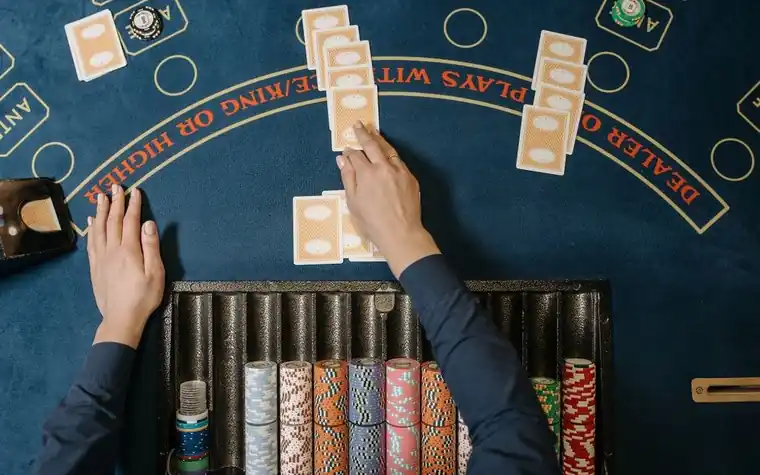
The goal, briefly
Beat the dealer's hand without going over 21. Number cards count as face value, face cards count as 10, and an Ace counts as 1 or 11 — whichever helps your hand more. A first-two-card total of 21 (Ace + a 10-value card) is a "blackjack," typically paying 3:2 instead of the usual even money.
Your four decisions
Hit — take another card. Stand — keep your current total. Double down — double your bet in exchange for exactly one more card, then stand. Split — if your first two cards are a pair, separate them into two hands, each with its own bet. Every one of these decisions has a mathematically correct answer depending on your total and the dealer's visible card — that answer is what "basic strategy" is.
What basic strategy actually is
Basic strategy is a chart — not a secret system, just the mathematically optimal play for every hand-total-versus-dealer-upcard combination, worked out by exhaustive computer simulation decades ago. A few of the most common rules: always split Aces and 8s; never split 10s; double down on 11 against almost any dealer card; stand on hard 17 or higher. The chart looks intimidating at first, but most players find they've memorized the common situations within a few sessions of reference.
Why the dealer's upcard changes your decision
The dealer's single visible card tells you their rough chance of busting. Dealer upcards of 4, 5, or 6 give the dealer the highest bust probability, which is why basic strategy gets more aggressive (more doubling, more standing on marginal totals) against those specific cards — you're playing to let the dealer bust rather than beating them outright.
Table rules that quietly change the house edge
Not all blackjack tables are equal even before you touch a card. A table paying 6:5 on blackjack instead of the standard 3:2 adds roughly 1.4% to the house edge — a meaningfully worse game dressed up as the same one. Rules like "dealer hits soft 17" (versus stands) and how many decks are in play also shift the edge slightly. Reading the felt before you sit down is worth the ten seconds it takes.
Basic strategy lowers the house edge — it does not create an edge for the player or guarantee any individual hand. See our responsible gambling page if it stops being fun.
Prefer a game with no decisions to learn? See our roulette odds guide, or compare blackjack against every other game in our house edge breakdown.
All content is fact-checked under our editorial standards.