
Casino War Rules and Strategy: Why Going to War Beats Surrendering on a Tie
Casino War is the simplest table game on most casino floors: one card for you, one for the dealer, and the higher card wins. There's no strategy to memorize for ordinary hands, which makes the few decisions that do exist — and the side bet that tempts almost everyone — worth understanding before sitting down.
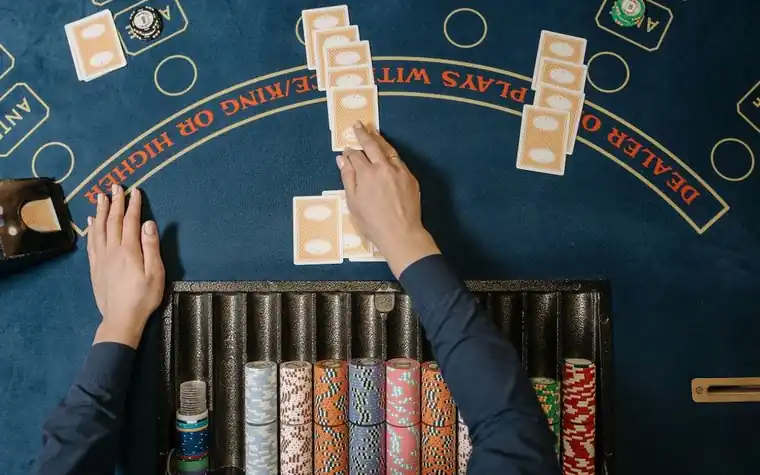
How a Hand of Casino War Plays Out
Every player places an ante on the layout. The dealer gives each player one card face up and takes one card too. Cards rank the way they do in most card games, with the ace high and the two low, and suits never matter. If the player's card is higher, the ante is paid at even money. If the dealer's card is higher, the ante is lost. That's the entire base game, and it usually resolves in a few seconds per round.
Why Ties Are the Only Place the House Gets Its Edge
Because both sides draw from the same deck and win at even money, the game would be perfectly fair if ties didn't exist. Ties are what tilt it. With six decks in the shoe, a tie happens roughly 7 to 8 percent of the time, and how the casino treats that tie decides the entire house edge. Posted rules vary by casino, so it's worth reading the table sign before the first ante goes down rather than assuming.
Going to War Versus Surrendering
When the cards tie, the player gets a choice. Surrendering gives up half of the ante and ends the hand. Going to war means placing a second bet equal to the ante; the dealer then burns three cards and deals each side another card. In most versions, if the player's new card ties or beats the dealer's, the raise wins and the ante is returned, while a lower card loses both bets. Some casinos pay the ante as well as the raise, and others handle a second tie differently, so the exact payout is another line to check on the layout.

The Math: Surrender Costs More Than War
Under common six-deck rules, going to war on every tie carries a house edge of about 2.9 percent, while surrendering every tie pushes it closer to 3.7 percent. The reason is that a tied card gives the player a slightly better than even chance in the war round, since the player also wins outright on a second tie. Surrendering throws that chance away in exchange for a guaranteed loss of half the ante. Going to war is the mathematically correct choice every time, and it's the only real decision in the game.
The Tie Bet Is the Expensive Part of the Table
Most tables offer an optional tie bet that pays when the first two cards match, usually at 10 to 1. Since a tie lands only around 7 to 8 percent of the time in a six-deck shoe, that payout leaves a house edge somewhere near 18 percent under typical rules — several times heavier than the base game. A few casinos pay a bit more, which narrows the gap, but it never comes close to the ante bet. Anyone treating the tie bet as a shortcut to a bigger win is choosing the worst wager on the layout.
Deck Count and Table Rules to Read First
Casino War was designed around multiple decks, and the count shapes the tie rate: fewer decks means slightly more ties and slightly different edges, which is why two tables can look identical and still play differently. Check three things before betting: how many decks are in the shoe, whether a war win returns the ante, and how the table handles a second tie. Small rule differences move the edge more than any playing style can.

Where Casino War Fits Among Table Games
Casino War asks for no skill, so it can't reward good play the way blackjack basic strategy does. A player who always goes to war and skips the tie bet gets a low-stakes, low-complexity game with an edge that's still higher than several alternatives. For a comparison across the floor, see our house edge breakdown, or a game where strategy matters more in Caribbean Stud Poker. More table-game explainers live in the casino section.
Going to war instead of surrendering lowers the house edge mathematically — it doesn't guarantee any single hand wins, and no rule change or bet size turns Casino War into a game the player beats over time. Must be 21+ to gamble in the US (18+ in the UK). See our responsible gambling page if it stops being fun.
All content is fact-checked under our editorial standards.