
Three Card Poker Rules and Strategy: The Q-6-4 Rule and Pair Plus Explained
Three Card Poker moved from a single Mississippi riverboat casino in the mid-1990s to nearly every regulated casino floor in the world, and the reason is speed: each hand resolves in seconds, there's no drawing or bluffing, and the entire strategy fits on an index card. That simplicity is also what trips up new players, who tend to either fold too often out of habit from five-card poker or chase side bets that carry a far worse edge than the main game.
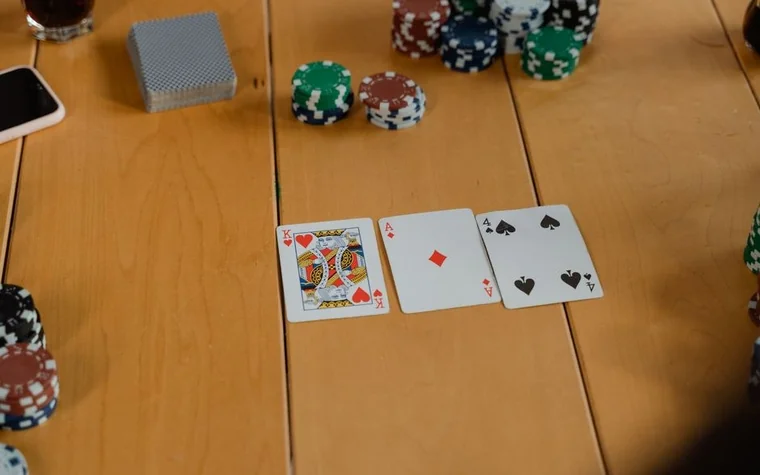
How Three Card Poker Is Played
Each player makes an Ante bet before any cards are dealt, then receives three cards face down while the dealer also gets three. After looking at the hand, the player either folds and forfeits the Ante, or makes a Play bet equal to the Ante to keep going. The dealer then reveals their own three cards. If the dealer doesn't qualify with at least a Queen-high hand, the Ante pays even money and the Play bet pushes back untouched. If the dealer qualifies, both bets are compared against the dealer's hand and paid or lost accordingly.
Hand Rankings Run Differently Than Five-Card Poker
With only three cards, the math changes the order of hands. A straight is harder to make than three of a kind or a flush, since there are fewer ways to draw three consecutive ranks than there are to match a suit or a rank. The official order from best to worst is: Straight Flush, Three of a Kind, Straight, Flush, Pair, and High Card. Players used to standard poker rankings sometimes misjudge a flush as weaker than it is here, which affects whether a marginal hand is worth playing on.
The Ante Bonus and Pair Plus Side Bet
Two payouts run alongside the main hand. The Ante Bonus pays extra on the Ante bet alone whenever a player holds a Straight or better, regardless of what the dealer shows or whether the player even makes the Play bet. Pair Plus is a separate optional wager made before the deal, paying out purely on the player's own three cards having a pair or better, with no comparison to the dealer at all. It's a simpler bet to understand, but its house edge depends heavily on the specific paytable posted at the table.
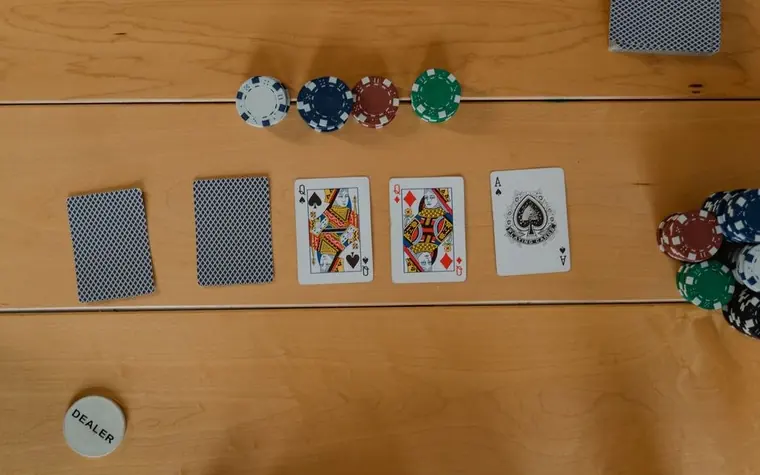
Optimal Strategy: The Q-6-4 Rule
Because the player acts before seeing the dealer's cards, correct strategy is fixed and doesn't change based on table conditions. The standard rule, worked out through combinatorial analysis, is to play any hand of Queen-6-4 or better and fold everything weaker. A hand like Q-8-2 beats the threshold and should be played; Q-6-3 falls just short and should be folded. This single rule brings the Ante-Play combination down to a house edge of roughly 2.01%, among the lowest of any table game that doesn't require card counting or complex decisions.
Why Pair Plus Carries More Variance
Pair Plus removes the dealer qualifying step entirely, which sounds like an advantage but actually raises the house edge in most paytables to somewhere between 2.3% and 7.3% depending on how the casino pays a straight flush and three of a kind. Some tables pay 40-to-1 on a straight flush, others 35-to-1; the gap changes the edge meaningfully over a full session. There's no strategy decision involved since the bet is placed blind, so the only real choice a player has is checking the payout card before sitting down.
Common Mistakes at the Table
The most frequent error is folding hands that meet the Q-6-4 threshold out of instinct, treating a low pair or a weak-looking Queen-high the way a five-card player would fold a marginal hand. The math already accounts for the dealer not qualifying roughly 30% of the time, which is baked into why Q-6-4 is the correct cutoff rather than a stronger hand. The second common mistake is betting Pair Plus at stakes larger than the Ante out of excitement over the bonus payouts, which shifts a session's real money onto the bet with the worse edge of the two.

Reading the Table Before You Sit Down
Three Card Poker tables post their Pair Plus and Ante Bonus paytables directly on the felt, and these vary by casino more than most players expect. A five-minute comparison between two tables in the same room can turn up a meaningfully different Pair Plus payout structure. Since the Ante-Play strategy itself never changes, the only pre-game decision that actually affects long-run results is which table's side-bet paytable to sit down at.
Following the Q-6-4 rule lowers the house edge on the Ante-Play bet compared to random play — it does not create a player edge or guarantee any outcome. Must be 21+ to gamble in the US (18+ in the UK). See our responsible gambling page if it stops being fun.
For how this compares to other table games by the numbers, see our house edge breakdown, or brush up on table etiquette in our first casino visit guide.
All content is fact-checked under our editorial standards.