
Let It Ride Poker Rules and Strategy: When to Pull Bets Back and When to Ride
Let It Ride looks like poker at a glance — five-card hands, familiar rankings — but nobody folds against you and there's no pot to win. It's a solo paytable game where the only real skill is knowing when to pull a bet back before the cards get worse.
Three Equal Bets, No Opponent to Read
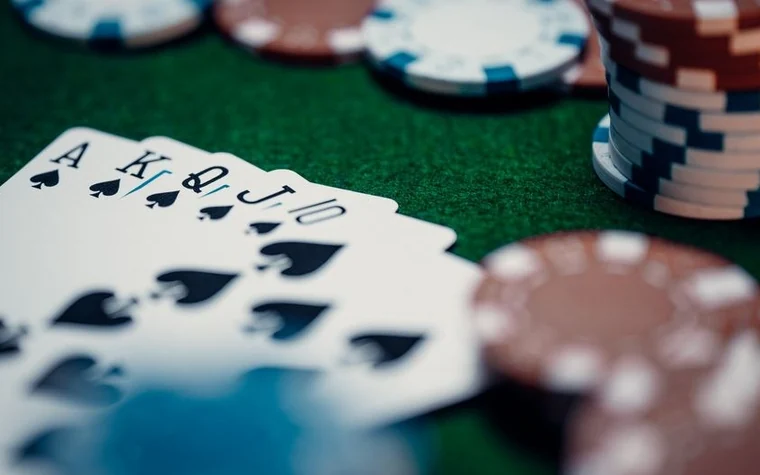
A player places three equal bets in circles marked 1, 2, and $. Despite looking like three separate wagers, they're really one bet split into three decision points. There's no dealer hand to beat and no other players at the table who matter — the payout depends entirely on the five-card hand the player ends up holding.
Three Cards Down, Two Held Back by the Dealer
Each player gets three cards face down. The dealer also places two community cards on the layout but keeps them face down until the betting rounds call for them. Those two cards are shared math, not shared cards — every player's final hand combines their own three with the same two community cards.
Round One: Deciding on Bet "1" With Only Three Cards Showing
After looking at the initial three cards, the player either pulls bet "1" back or lets it ride. Correct strategy says let it ride only with three of a kind, a pair of 10s or higher, or three suited cards running toward a royal flush drawn from A-K-Q-J-10. Everything else gets pulled back before the first community card even turns over.
Round Two: One Community Card Changes the Math
The dealer turns the first community card face up. The player now sees four of their eventual five cards and makes the same call on bet "2." A hand that already qualifies to win, four cards toward a flush, or four cards toward an open-ended straight are the standard triggers to let it ride at this stage — everything short of that comes back off the table.
The Final Card and the Payout Table
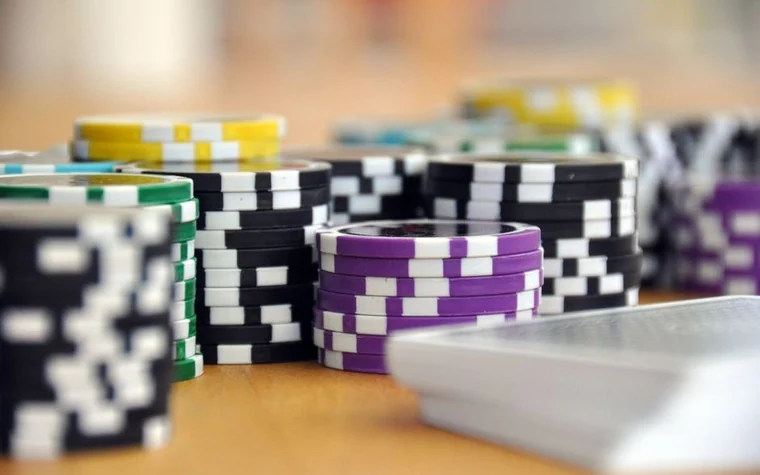
The second community card flips, the hand is set, and every bet still in play — the "$" bet always stays in, plus "1" and "2" if they weren't pulled back — pays according to the posted table. A pair of 10s or better returns even money, and the curve climbs from there: two pair around 2 to 1, a straight around 5 to 1, a flush around 8 to 1, up toward roughly 1,000 to 1 for a royal flush on most paytables. Anything weaker than a pair of 10s loses whatever is still riding.
Optimal Strategy Lands the House Edge Around 3.5%
Because three separate decisions shape the outcome, Let It Ride's house edge sits in the mid-3% range with correct play, figured against total money wagered rather than just the initial bet. That's worse than blackjack or the baccarat banker bet, but better than several other poker-based table games — the tradeoff for a paytable that rewards rare hands heavily instead of grinding out small, frequent wins.
The Three Card Bonus Side Bet Rarely Pays Its Way
Many tables offer an optional side bet judged only on the player's first three cards, paying out for a flush or better before any community card even appears. It resolves instantly, which is part of the appeal, but its house edge typically runs well above the base game's on most posted paytables, and the odds of that three-card hand hitting don't improve no matter how well the base game is played.
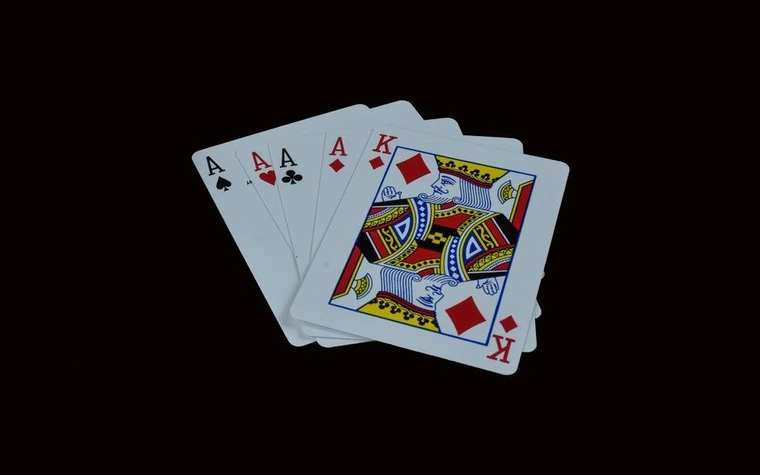
Pulling back weak hands and letting strong ones ride lowers the house edge mathematically — it doesn't guarantee any hand wins, and the bonus side bet doesn't change the base game's math either way. Must be 21+ to gamble in the US (18+ in the UK). See our responsible gambling page if it stops being fun.
For how these five-card rankings compare across games, see our house edge breakdown, or read how a similar no-fold structure plays out in Caribbean Stud Poker.
All content is fact-checked under our editorial standards.