
Caribbean Stud Poker Rules and Strategy: When to Fold and When the Progressive Is Worth It
Caribbean Stud Poker borrows poker's hand rankings but plays nothing like poker. No bluffing, no shared pot — one repeated decision against a dealer bound by a fixed qualifying rule and an unchanging paytable.
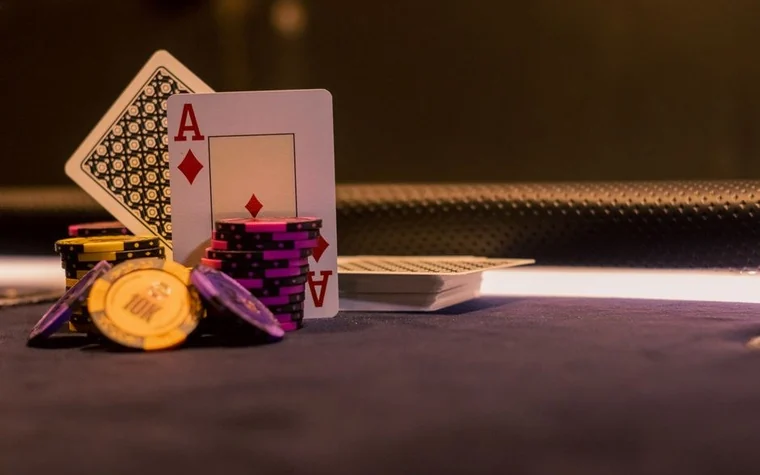
A House-Banked Game Wearing Poker's Rules
Every player competes only against the dealer, never each other. The five-card rankings match standard poker — pair, two pair, straight, flush and up — but the strategy shares little with a poker room, since there's no one to bluff.
The Ante Comes First, Then Five Cards Each
Every hand opens with a mandatory Ante bet. Once everyone has anted, the dealer deals five cards to each player and five to themselves, turning one dealer card face up. Players study their hand and that exposed card, then face the only real decision the game asks of them.
Raise or Fold Is the Whole Game
After seeing the hand, a player either folds and forfeits the Ante, or raises exactly 2x the Ante to stay in. No smaller raise, no option to just call — an all-or-nothing bet sized by the house, which is why starting-hand strategy is so mechanical.
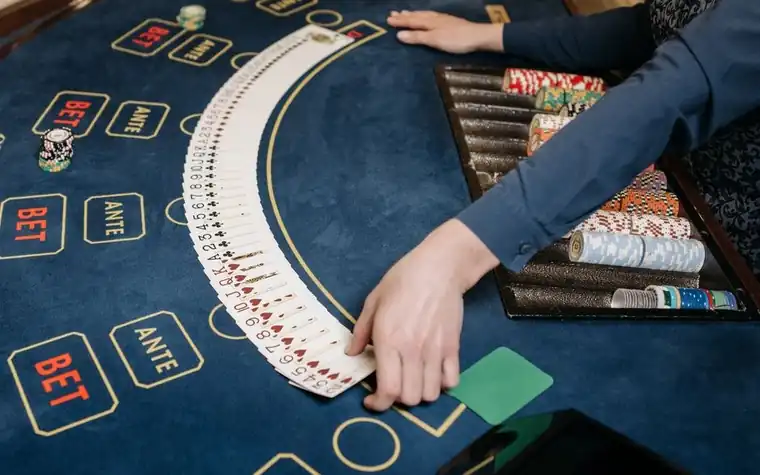
Dealer Qualification Decides Who Even Gets Paid
The dealer needs at least Ace-King high to "qualify." If not, the Ante pays even money and the Raise bet just pushes back, regardless of the player's hand. If the dealer qualifies, both bets compare hand-for-hand, and the Raise bet pays on a sliding scale tied to strength.
The Payout Table Rewards Rare Hands Heavily
A pair barely clears even money, but the curve steepens fast: two pair pays 2 to 1, a straight pays 3 to 1, a royal flush pays 100 to 1 on the Raise bet alone. That's why the house edge sits above 5% even with perfect play — the game leans on a rare big win.
The Progressive Jackpot Rarely Justifies Itself
Most tables offer an optional progressive side bet, a flat dollar amount, paying a jackpot share for a flush or better and the full jackpot for a royal flush. Its edge runs higher than the base game, often north of 25%, since the odds of a royal flush don't shift because a jackpot is attached. It's a lottery ticket bolted onto a table game.
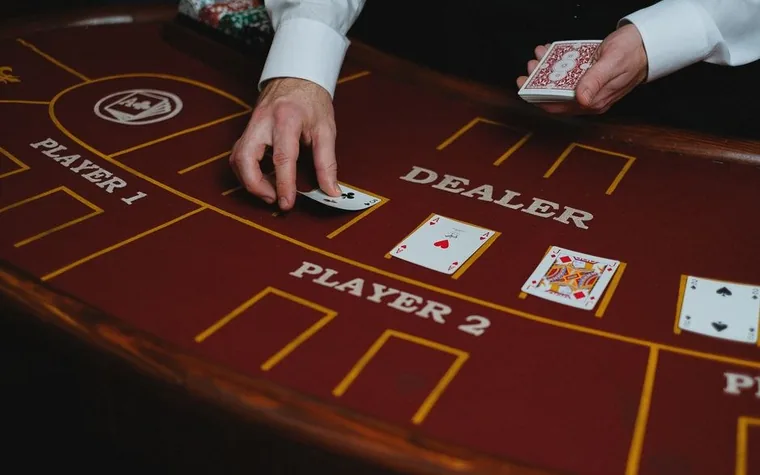
Raising only with strong starting hands lowers the house edge mathematically — it doesn't guarantee any hand wins, and no side bet beats the built-in qualification math. Must be 21+ to gamble in the US (18+ in the UK). See our responsible gambling page if it stops being fun.
For how the five-card rankings work, see our Texas Hold'em rules guide, or compare this edge in our house edge breakdown.
All content is fact-checked under our editorial standards.