
Texas Hold'em Starting Hand Strategy: Which Hands to Play From Each Position
New to the game? Start with Texas Hold'em rules and hand rankings first.
Knowing Hold'em's rules and playing it well are two different skills. The single biggest lever a beginner can pull isn't a clever bluff — it's simply which starting hands you choose to play, and from where at the table.
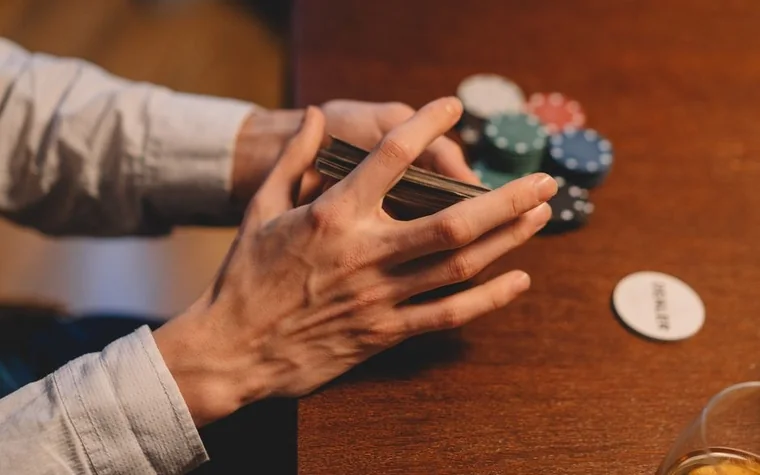
Why position is worth more than your cards
"Position" means where you act relative to the dealer button. Acting last in a betting round (being "in position") is a real, measurable advantage — you get to see what everyone else does before deciding. The same hand that's a fold from early position is often a profitable raise from late position, purely because of the information advantage. If you learn one concept before anything else, learn this one.
A simple starting hand framework
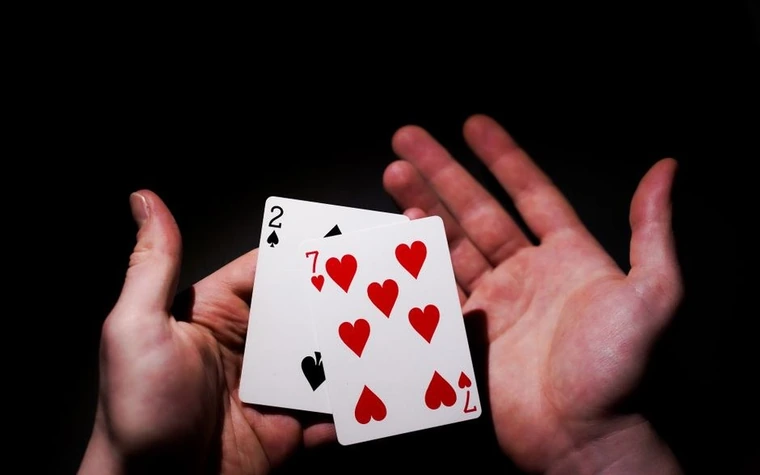
You don't need to memorize a full chart to start playing sensibly. As a rough guide from early position, play tightly: big pairs (AA-JJ), and strong ace combinations (AK, AQ). From late position, the range opens up considerably — you can profitably play more speculative hands like suited connectors (78 suited) or small pairs, because position lets you play them more cheaply and fold more easily when they miss.

Pot odds — the concept that replaces guessing
Pot odds compare the size of a bet you're facing to the size of the pot. If the pot is $100 and your opponent bets $50, you need to put in $50 to win a $150 pot — you're getting 3:1 on a call. Compare that ratio to your rough chance of completing your hand, and you have a mathematically grounded call-or-fold decision instead of a gut feeling. This single tool separates players who are guessing from players who are calculating.
The most common beginner leak
Playing too many hands from early position is, by a wide margin, the most common mistake new players make. It feels passive to fold repeatedly, but folding a marginal hand costs you nothing beyond the blinds you've already posted — playing a bad hand out of boredom costs you real chips, repeatedly, over a session.
Bankroll management matters more than any single hand
A commonly cited guideline is to bring at least 20-30 buy-ins worth of bankroll to the stakes you're playing, specifically because Hold'em has real short-term variance — even a mathematically correct decision loses sometimes. Sitting down with exactly one buy-in means a single bad run can end your session (or your bankroll) regardless of how well you played.
No strategy guarantees winning any individual hand or session — Hold'em has genuine short-term variance even with correct play. See our responsible gambling page if it stops being fun.
All content is fact-checked under our editorial standards.