
Your First Casino Visit: Buying Chips, Table Minimums, and Etiquette
Walking into a casino for the first time is less intimidating once you know the mechanics: how money becomes chips, what the little sign on each table is telling you, and which unwritten rules the regulars are quietly following. None of it is complicated, but almost all of it is assumed knowledge.
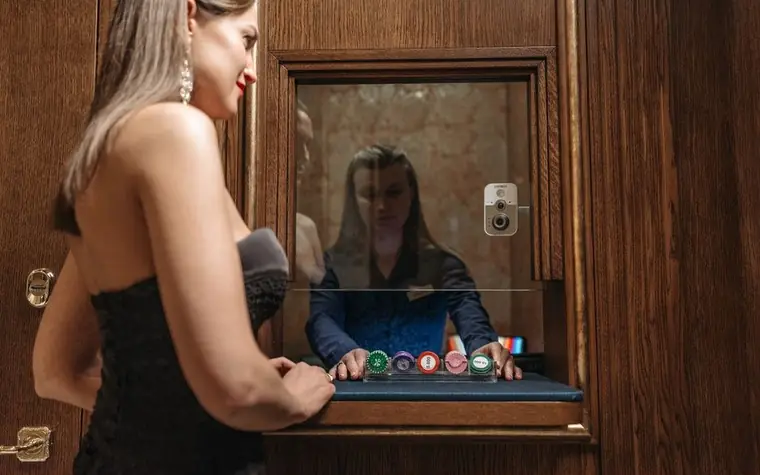
Before you leave the house
Bring government-issued photo ID — most floors card at the door or at the cage regardless of how old you look. Check the property's dress code in advance, since it varies far more than people expect: some rooms are shorts-and-sandals casual, others enforce collared shirts after a certain hour. Decide your budget before you arrive and treat it as an entertainment cost you have already spent, not an investment you expect back.
Buying chips: don't hand cash to the dealer
At a table, place your cash flat on the felt rather than passing it hand-to-hand. The dealer will announce the amount to the pit, spread the bills for the overhead cameras, and slide your chips across. The hand-to-hand rule exists for surveillance reasons, not politeness, which is why dealers are strict about it. You can also buy chips at the cage on the way in.

Reading the table sign
Every table has a small placard with the minimum and maximum bet, and often the specific rule variant in play. On blackjack, look for whether the game pays 3:2 or 6:5 on a natural — that single line changes the house edge more than any decision you will make all night. Minimums typically climb as the room fills up on weekend evenings, so a $10 table at 4pm may be a $25 table by 9pm.
Joining a game already in progress
Wait for the hand to finish before sitting down and buying in. On some tables you may be asked to wait until the shoe is finished; that is a house or table convention, not a rule you did anything to trigger. If a seat has chips or a jacket in front of it, it is taken.
Handling chips and cards
Once your bet is placed and the deal begins, don't touch your wager. If the game is dealt face-up — most shoe blackjack is — don't touch the cards either; signal your decisions with hand gestures, which the cameras can read and a spoken word cannot. Keep drinks on the rail, off the felt, and keep phones off the table surface.
Tipping
Tipping dealers is customary in the United States and optional-to-rare in much of Europe and Asia, so it is worth checking local norms for wherever you are playing. Where it is customary, a common approach is a small chip placed as a bet for the dealer, or a periodic toke after a good run. Cocktail servers are usually tipped per drink even when the drink itself is complimentary.
Players cards and cashing out
Sign up for the loyalty card at the desk before you play — it costs nothing and tracks the play you were going to do anyway. When you are finished, exchange your chips at the cage rather than the table; dealers will "color up" your small chips into larger denominations first to make the trip easier. Chips from one property are generally not valid at another.
What to skip on a first visit
Skip side bets with names that promise big multiples — they almost always carry a much higher edge than the base game. Skip any table where you don't know the rules yet; watch a few hands from behind the rail instead, which nobody minds. And skip the idea that you are due for anything: each hand, spin, and reel is independent of the last. If you want a game with straightforward rules and a low edge to start on, blackjack with basic strategy is the usual recommendation, and our destinations section covers what individual properties are actually like.

21+ in the United States, 18+ in the United Kingdom. Gambling is entertainment with a built-in cost, not a way to make money. See our responsible gambling page if it stops being fun.
All content is fact-checked under our editorial standards.