
The Big Six Wheel Explained: Layout, Payouts and the House Edge on Every Bet
The big wheel at the entrance of a casino, often called the Big Six wheel, the Money Wheel or the Wheel of Fortune, is easy to understand and hard to resist: place a chip on a symbol, watch a tall vertical wheel click past its pegs, and see where the pointer stops. It is also one of the most expensive games on the floor. This guide explains how the wheel is laid out, what each bet really costs and why no betting pattern changes the result.
How the Big Six Wheel Works
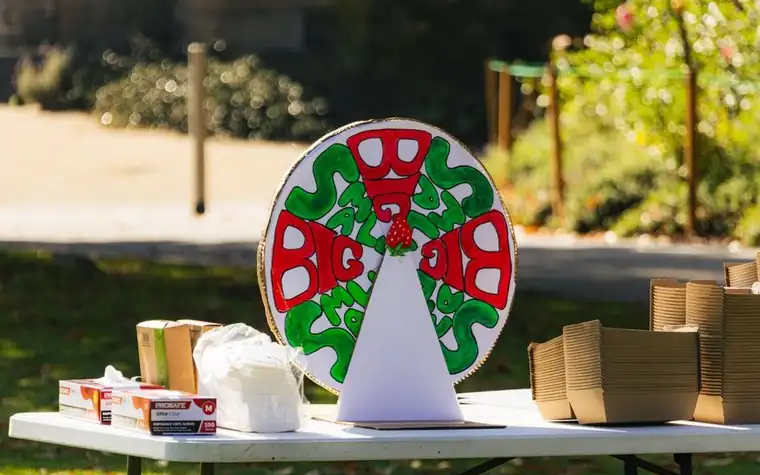
The wheel stands upright, usually about four to six feet across, with a flexible leather pointer at the top. Its rim is divided into many equal segments, each marked with a dollar symbol or a special symbol. The felt layout in front of the dealer repeats the same symbols, so you place chips on the symbol you are betting on. The dealer spins the wheel, and when the pointer settles, bets on the matching symbol are paid at the stated odds while all other bets lose. There is no skill, no draw and no decision beyond what to bet and how much.
The Typical Layout and Pay Table
A common American wheel has 54 segments: 24 marked $1, 15 marked $2, 7 marked $5, 4 marked $10, 2 marked $20, and two special segments, often a joker and a flag or logo. Bets on a dollar symbol pay at that amount to one, so a winning $2 symbol pays 2 to 1. The two special segments usually pay 40 to 1. Layouts and payouts are not standardized, however. Some wheels have 52 segments, some pay different odds on the specials, and some leave out certain symbols, so read the pay table printed on the felt before you bet.
What Each Bet Costs You
Using the 54-segment layout above, the math is simple to check. A $1 symbol wins 24 times in 54 spins on average and pays even money, which works out to a house edge of about 11 percent. The $2 symbol is about 17 percent. The $5 and $20 symbols are each about 22 percent, the $10 symbol is about 18.5 percent, and the two special segments are about 24 percent. Even the best bet on the wheel costs more than nearly every table game, which is why our overview of house edge by game places it near the bottom. Other wheels will differ, so treat these figures as an example, not a rule.
Why the Long Shots Cost the Most
It is tempting to think a bigger payout is a fair trade for a smaller chance. On this wheel it is not. The casino sets the pay table so that each step up in prize costs more in expected value, apart from the $10 symbol, which is a slight exception on this layout. A $20 symbol appears twice in 54 segments and pays 20 to 1, but the fair price for that chance would be 26 to 1. The gap between the fair payout and the posted payout is the house edge, and the rarer the symbol, the wider that gap tends to be.
Can a Pattern or System Beat the Wheel?
No. Each spin is independent, and a properly maintained wheel has no memory of earlier results. Systems that suggest betting on a symbol that has not shown up recently, or spreading chips across several symbols, only change how often you win and how large the swings are. Betting on every symbol at once guarantees a loss equal to the edge, because the pay table is built to return less than you staked. The casino can also check wheels for balance and wear, but a player cannot measure that from the rail.
Choosing Bets and Managing Volatility
If you play, the $1 symbol has the lowest edge on a typical layout and wins close to half the time, so it produces the longest sessions on a fixed budget. The higher symbols behave more like lottery tickets: long dry spells and the occasional large payout. Neither approach is favorable, and the decision is simply how much volatility you want for the money you have set aside. Keep your bet size small relative to your total budget, since a spin takes only a minute or so and the cost adds up quickly.
Where You Will Find It and What to Check
The wheel is a fixture in many land-based casinos in the United States and elsewhere, often near the entrance or the sports book, and some venues offer electronic versions. Minimum bets are usually low, which is part of the appeal. Before playing, confirm how many segments there are, what the special symbols pay and whether there is a posted limit. If you are visiting a property for the first time, see the rest of our casino game guides for games where better decisions can lower the edge.
For comparison, the lowest-edge craps bets cost a small fraction of what the wheel does, and keno is another number-based game with a high built-in cost.
General information only; layouts, pay tables and house edge vary by casino, so confirm the rules where you play. 21+ in the United States, 18+ in the United Kingdom. Gambling is entertainment with a built-in cost, not a way to make money. See our responsible gambling page if it stops feeling like fun.
All content is fact-checked under our editorial standards.