
Macau Casinos: Cotai Strip vs the Peninsula, and Where to Base Your Trip
Macau is the largest casino market in the world by gaming revenue, but first-time visitors often arrive expecting one strip of resorts and find two very different districts instead. The reclaimed land of Cotai holds the big integrated resorts; the older Macau Peninsula holds the original casinos and the UNESCO-listed historic centre. Which side you base yourself on changes the trip more than which property you pick.
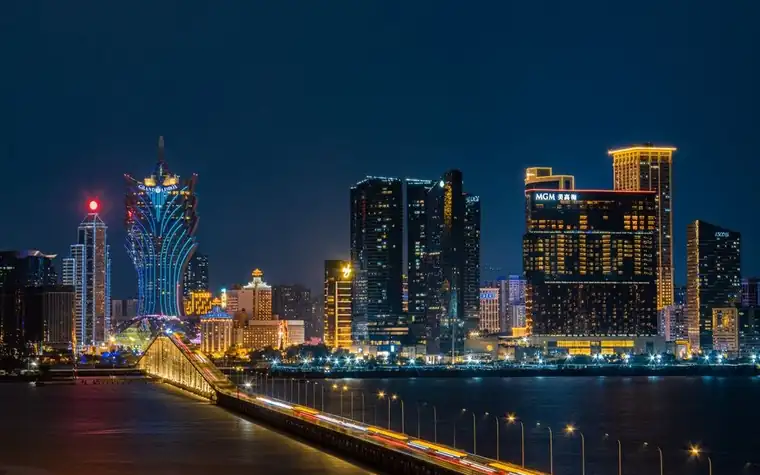
Cotai and the peninsula are two different trips
Cotai is a strip of reclaimed land between the islands of Taipa and Coloane, built out from the 2000s onward with large integrated resorts — hotel towers, indoor malls, theatres, convention space and gaming floors under one roof. Distances between properties are short and largely covered by air-conditioned walkways, which matters more than it sounds in Macau's summer humidity. The Macau Peninsula is the older, denser half: the original casinos sit among ordinary city blocks, Portuguese-era squares and food streets. Cotai is a resort campus; the peninsula is a city you can walk out into. Neither is better — decide by whether you want a self-contained resort or a place with a neighbourhood attached.
Getting there: ferry, bridge or airport
Most visitors arrive from Hong Kong, which has no casinos of its own. Three routes are usual. The ferry runs to either the Outer Harbour terminal on the peninsula or the Taipa terminal near Cotai — pick the terminal that matches your hotel, because crossing between the two afterwards takes longer than people expect. The Hong Kong–Zhuhai–Macau Bridge shuttle bus is normally cheaper than the ferry and runs around the clock. Or fly straight into Macau International Airport, which sits on Taipa, minutes from the Cotai resorts. Macau runs its own immigration, separate from Hong Kong and mainland China, so carry your passport and check the visa rules for your nationality before booking — requirements differ widely and do change.
What the gaming floor is actually like
Macau floors are not Las Vegas floors. Baccarat dominates — it has long accounted for the large majority of table revenue, and on a busy evening the mass floor is mostly baccarat tables with spectators standing behind the players. Blackjack, roulette and sic bo are there but take up far less space, and slot machines are a much smaller share of the business than in the United States. Table minimums generally run higher than in Singapore or on most of the Vegas Strip, and they climb in the evening and at weekends; if you want the lowest minimums on offer, look on a weekday afternoon. Currency catches people out too: the pataca (MOP) is the official currency, but casinos price and pay in Hong Kong dollars, and change handed back in patacas is not spendable once you leave Macau.
Entry rules, ID and floor etiquette
The minimum gambling age in Macau is 21, and staff check ID at the door and can ask again at a table. Unlike Singapore, there is no entry levy for visitors — walking onto the floor is free. Two rules surprise newcomers. Photography and video are not permitted on gaming floors, and security will stop you politely but immediately, so keep the phone away until you're back in the mall. And local restrictions apply to some Macau residents, including casino employees, who are barred from gambling at the properties they work for. The dress code is looser than Singapore's and enforced more lightly, but beachwear and flip-flops are still a poor choice after dark.
Where to stay on each side
On Cotai, the resort is the accommodation: you can land at the airport, take a shuttle, and not step outside again for two days. That is convenient, expensive, and completely isolated from the city. On the peninsula, a mid-range hotel near Senado Square puts you a ten-minute walk from both casinos and the historic centre, usually for less money. Two nights on each side is a common compromise and avoids the feeling that you saw a mall rather than a place. Free resort shuttle buses connect the ferry terminals and the airport to most major properties; they are open to anyone and are the cheapest way to move around, though they link resorts to transport hubs rather than running point to point across town.
What to do when you're off the floor
Macau is small enough that the non-gaming half of the trip costs you almost no travel time:
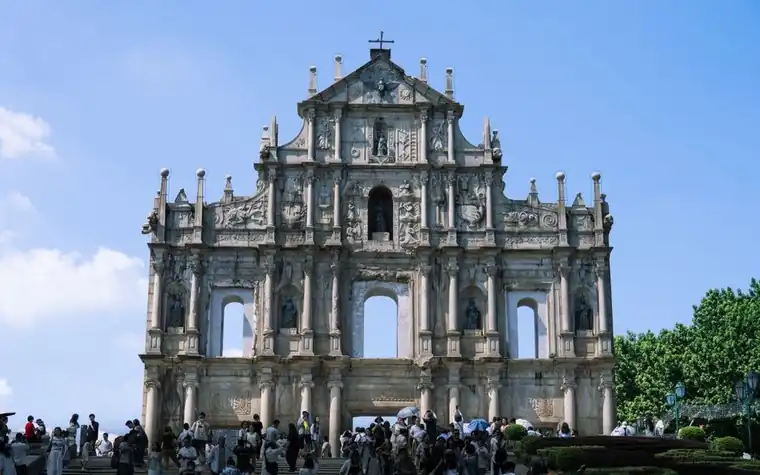
Ruins of St Paul's — the stone façade of a 17th-century church and the most photographed thing in the territory; go early, before the steps fill up.
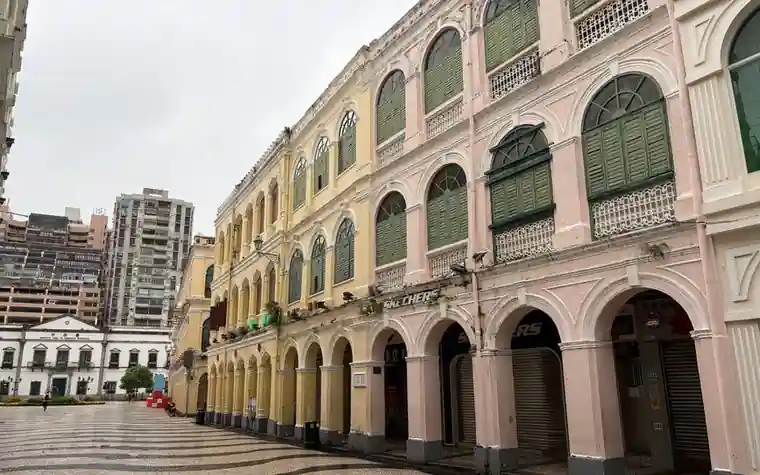
Senado Square — the wave-patterned mosaic plaza at the centre of the UNESCO-listed historic area, ringed by pastel colonial buildings.
Taipa Village — narrow lanes of Macanese restaurants a few minutes from the Cotai resorts, and the easiest escape from hotel buffets.
Coloane and Hac Sa — the quiet southern end of the territory, with a dark-sand beach and the village that made Macau's egg tarts famous.
Macau Tower — an observation deck with a glass floor, plus the bungee jump for whoever in the group insists on it.
Practical notes for a first Macau trip
A Light Rapid Transit line links the airport and the Taipa ferry terminal to the Cotai resorts, with an extension running toward the peninsula — check which sections are operating before you plan around it. Summer is hot, humid and inside typhoon season, when ferries and flights can be suspended at a few hours' notice, so leave slack in a tight itinerary. Set your gambling budget before you arrive, keep it separate from the travel budget, and treat the house edge as the price of the entertainment rather than something to beat — our house edge breakdown by game shows roughly what each game costs per hour of play. For the opposite model — one property, one building, strict entry rules — see our Marina Bay Sands guide.
21+ in the United States, 18+ in the United Kingdom; the minimum age in Macau is 21. Entry rules, transport links and table minimums are set by operators and local authorities and change without much notice — confirm current details before you travel. If gambling stops being entertainment for you, see our responsible gambling page.
All content is fact-checked under our editorial standards.